Dinosaurs are often imagined walking on land, but many prehistoric creatures also lived in or near water. When people search for swimming dinosaurs, they are usually referring to animals that could swim or lived in oceans and rivers.
This topic includes both real dinosaurs and other prehistoric creatures that adapted to aquatic environments. Learning about them helps us better understand how diverse ancient ecosystems were.
What Are Swimming Dinosaurs and Marine Reptiles?
The idea of all swimming dinosaurs can be a bit misleading, because most water-dwelling prehistoric animals were actually marine reptiles. These creatures evolved specifically for life in water and had features like flippers and streamlined bodies.
Some people also search for swimming reptile dinosaurs, which usually refers to animals like mosasaurs and plesiosaurs. While they are not true dinosaurs, they are still closely related in prehistoric studies.
Understanding this difference makes it easier to explore extinct sea creature dinosaurs and how they adapted to different environments.
Common Swimming Dinosaurs Like Mosasaurus
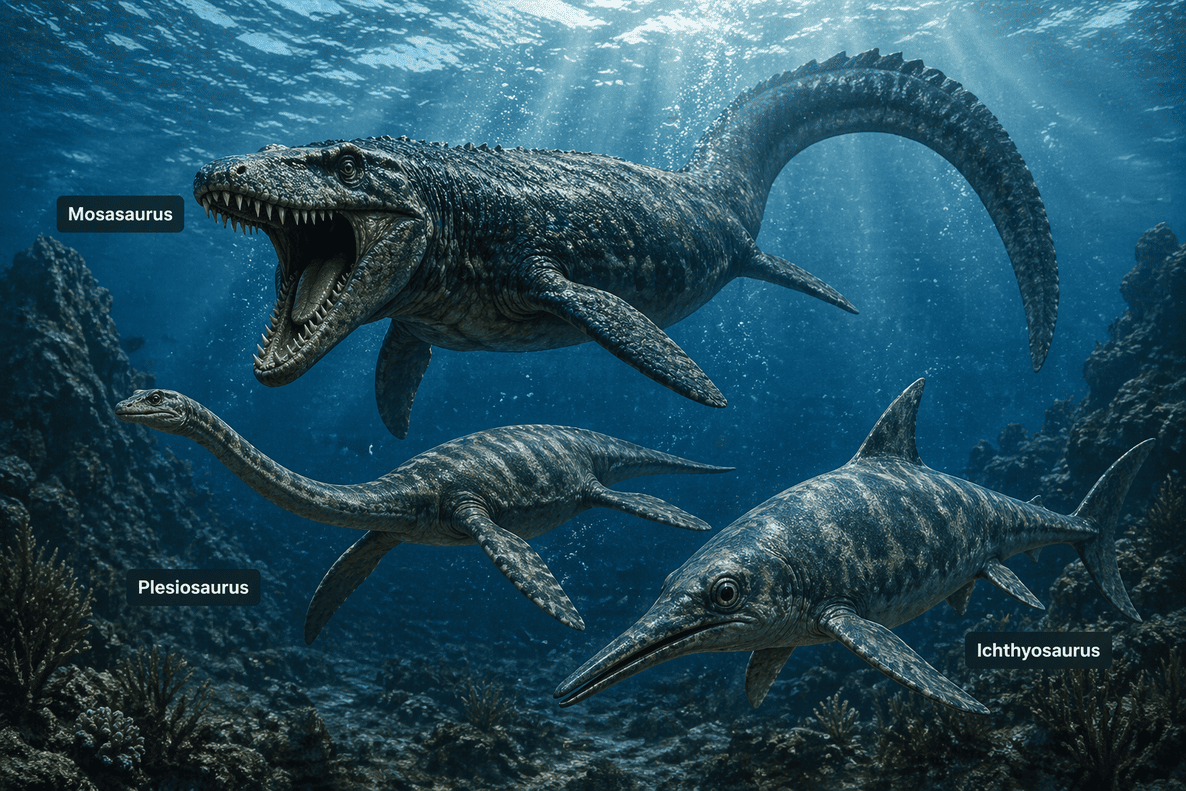
Many of the most famous common swimming dinosaurs are actually marine reptiles. One of the best-known examples is Mosasaurus, a powerful predator that lived in ancient oceans.
Here are some examples of prehistoric sea creatures often called swimming dinosaurs:
- Mosasaurus: a powerful ocean predator
- Plesiosaurus: long-neck marine reptile
- Ichthyosaurus: fast and dolphin-like swimmer
The term swimming dinosaur mosasaurus is very popular because of its appearance in movies and documentaries. Other well-known creatures include Plesiosaurus, with its long neck, and Ichthyosaurus, which had a body shape similar to modern dolphins.
These animals dominated the oceans and played a key role in prehistoric marine ecosystems.
Did Any Dinosaurs Actually Swim?
There is still debate about whether true dinosaurs were strong swimmers, but some scientists believe that certain species could move through water when needed.
One interesting example is Spinosaurus, which is believed to have spent a significant amount of time in water. Unlike most dinosaurs, it had features such as a long, crocodile-like snout and strong tail that helped it move through water.
Some scientists think Spinosaurus could hunt like a swimmer, catching fish in rivers and shallow waters. This makes it one of the closest examples to what people imagine when they think about swimming dinosaurs.
Large dinosaurs may have crossed rivers or swamps, which is why the concept of all swimming dinosaurs continues to interest people. Even if they were not fully aquatic, their ability to interact with water environments shows how adaptable they were.
Conclusion
Exploring prehistoric life in water opens up a fascinating world beyond land dinosaurs. From ocean predators to semi-aquatic creatures, there is a wide range of species to discover.
Whether you are interested in marine reptiles or curious about how dinosaurs interacted with water, this topic offers a deeper understanding of ancient life on Earth.
While swimming dinosaurs thrived in water environments, smaller species on land relied on speed and agility, often referred to as small dinosaurs.