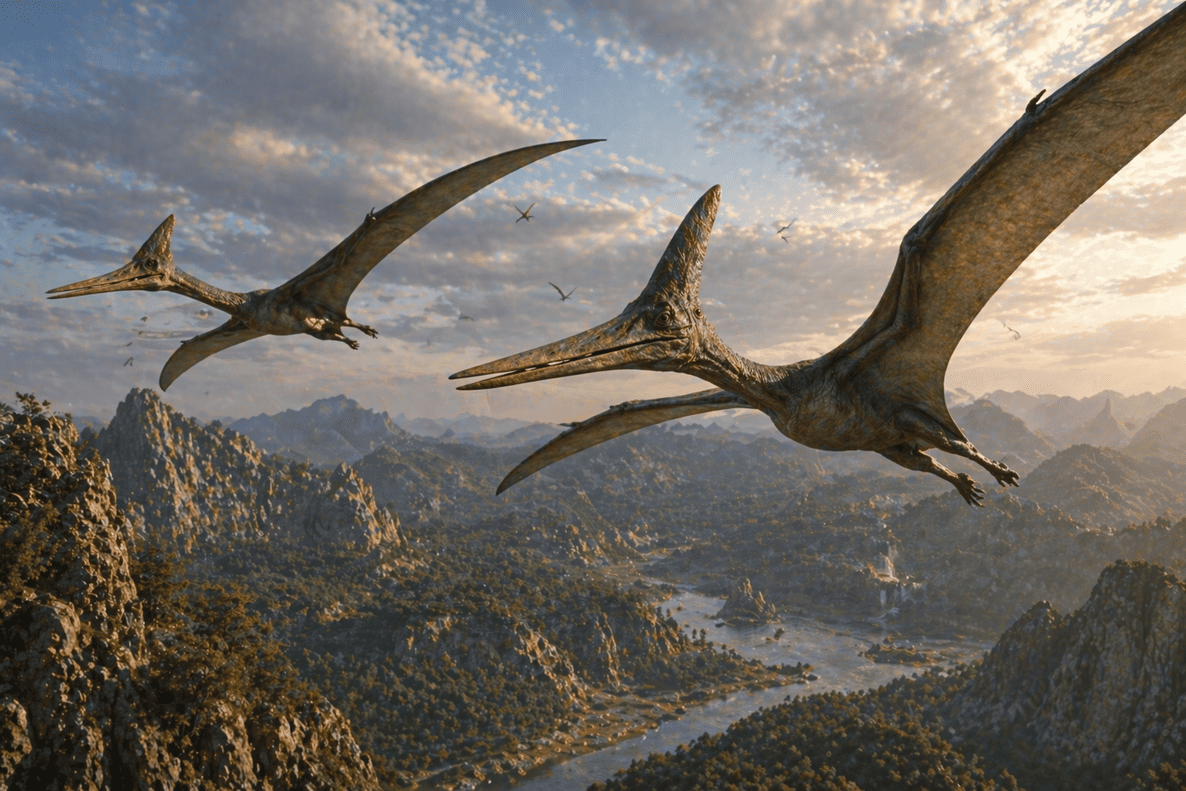
Many people are fascinated by flying dinosaurs and wonder which prehistoric creatures were able to fly. While most dinosaurs lived on land, some ancient animals developed the ability to glide or fly through the air.
These creatures were not exactly the same as modern birds, but they played an important role in prehistoric ecosystems. Learning about them helps us better understand how flight evolved over time.
Different Flying Dinosaurs and Their Types
There are many different flying dinosaurs that people often talk about, although most of them are technically flying reptiles called pterosaurs.
Some of the most well-known include Pteranodon and Pterodactyl. When exploring the kinds of flying dinosaurs, it becomes clear that they had wings made of skin stretched over long finger bones.
These adaptations allowed them to glide across large distances and hunt for food from above.
Here are some examples of flying prehistoric creatures:
- Pteranodon: large wingspan and strong glider
- Pterodactyl: one of the most recognized flying reptiles
- Quetzalcoatlus: one of the largest flying animals ever
In addition to their wing structure, these flying creatures had lightweight bodies that made it easier for them to stay in the air. Their bones were often hollow, similar to modern birds, which reduced weight without losing strength.
When studying different flying dinosaurs, scientists also look at how they launched into flight. Some may have used powerful leg muscles to jump into the air, while others likely relied on cliffs or high places to glide. These details help us better understand the kinds of flying dinosaurs and how they adapted to aerial life.
All Flying Dinosaurs Names and Popular Examples
People often search for all flying dinosaurs names to learn more about these fascinating creatures. While there is no complete list that everyone agrees on, several species are commonly mentioned.
The term pteranodon flying dinosaurs is especially popular because of how often it appears in media and educational content. These creatures are known for their long beaks and impressive wingspans.
Understanding these names helps make it easier to explore prehistoric life and recognize different species.
Another important aspect of learning all flying dinosaurs names is understanding how each species was adapted to its environment. Some were built for long-distance gliding, while others were better suited for short, controlled flights.
For example, certain species had wider wings for stability, while others had narrower wings for speed. This variation shows that flying prehistoric creatures were not all the same, but had different roles in their ecosystems. It also makes exploring these species more interesting and easier to remember.
Here are some of the most well-known flying dinosaur names (often called flying reptiles):
- Pteranodon: large wingspan and long beak
- Pterodactyl (Pterodactylus): one of the earliest discovered flying species
- Quetzalcoatlus: one of the largest flying animals ever
- Rhamphorhynchus: long tail and narrow wings
- Dimorphodon: strong jaws and unique skull shape
- Tapejara: colorful crest and wide wings
These names represent some of the most studied flying prehistoric species, each with unique features and adaptations for life in the air.
Jurassic World Flying Dinosaurs and Cool Species
In movies, especially jurassic world flying dinosaurs, these creatures are shown in a more dramatic and sometimes exaggerated way.
Many viewers are drawn to cool flying dinosaurs because of their unique appearance and ability to move through the air. The films often highlight their size, speed, and hunting behavior.
While these versions are not always scientifically accurate, they still help spark interest in prehistoric animals and their evolution.
Conclusion
Flying prehistoric creatures offer a unique perspective on how animals adapted to life in the air. Even though they were not true dinosaurs, they are still an important part of prehistoric history.
Learning about them helps us understand the origins of flight and the diversity of life millions of years ago.
Unlike marine species known as swimming dinosaurs, these flying creatures evolved in a completely different way.